

The number of billionaires has surpassed 3,000 for the first time, and the level of billionaire wealth is now higher than at any time in history. Meanwhile, one in four people globally face hunger. Fair taxation can play a vital role in addressing this massive inequality.
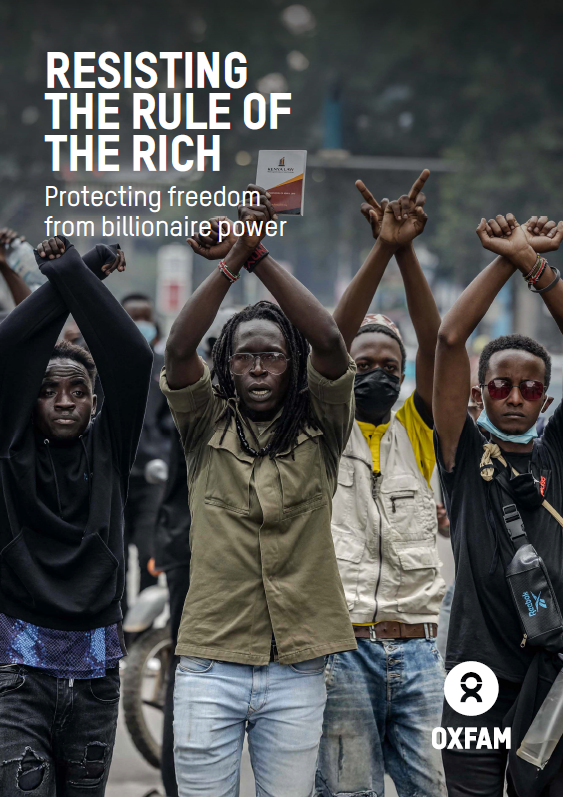
The recent report from Oxfam “Resisting the Rule of the Rich: Defending Freedom Against Billionaire Power” reveals how the level of billionaire wealth is now higher than at any time in history. It has some stark statistics exposing the massive inequality between the “haves” and the “have-nots”, while highlighting how the super-rich are securing political power to shape the rules of our economies and societies for their own gain and to the detriment of the rights and freedoms of people around the world.
Amongst the solutions proposed to rein-in this rampant and rising oligarchy is to effectively tax the super-rich to reduce their power, including with broad-base taxes on income and wealth at high enough rates to reduce massive levels of inequality.
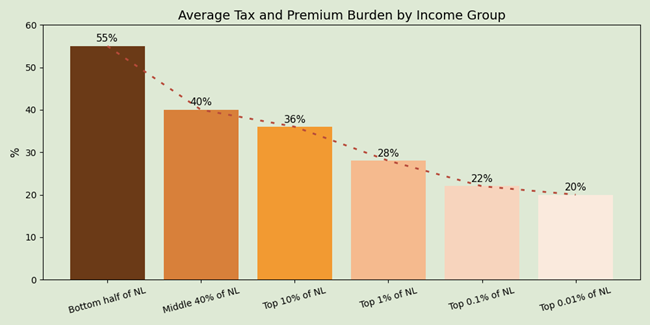
Taxes play a key role in growing inequality, with biased tax systems across the globe favoring the wealthiest. For instance, research from the Netherlands demonstrates that billionaires pay an average of about 20% tax on their total income, while an average Dutch worker pays around 45% on taxes. This gap is mainly because employment income (e.g. wages and other work benefits) is taxed much more heavily than income from capital (e.g. from shares, real estate or businesses), with the wealthiest heavily relying on dividends and capital gains instead of regular employment income. As a result, the richer you are, the less tax you pay in relative terms.
From individuals to countries, fair tax systems that effectively tax the wealthiest in society are necessary to combat increasing inequality between rich and poor. Due to global tax avoidance by multinationals and wealthy individuals, as well as ineffective taxation frameworks, low- and middle-income countries miss out on significant tax revenues with massive implications for their capacity to spend on education, health care, infrastructure and other public services. Women and girls – which are traditionally more reliant on public services and expenditure – pay the price when governments cannot invest sufficiently in them. An unfair tax system thus stands in the way not only of economic equality, but also of gender equality.
On the occasion of the World Economic Forum Annual Meeting held last month in Davos, millionaires from around the world called on elected representatives to tackle the existential global crisis posed by extreme wealth, by taxing the super-rich. Polling of millionaires carried out by the group Patriotic Millionaires found that only 17 percent of polled millionaires oppose higher taxes on the very richest to invest in public services and tackle the cost-of-living crisis, with 65 percent supporting higher taxes on the super-rich.
Make Tax Fair has ample evidence to show the importance of fair taxation and taxation systems that dig deep to look at all the effects, intended and unintended, fiscal policies can have. Through its Fair Tax Monitor (FTM) methodology, qualitative and quantitative information can be gathered in a standardized manner, enabling all stakeholders working on FTM projects to develop comprehensive analyses of fiscal policies within their domestic context. The FTM does furthermore offer options for thematically focusing the FTM work, with specific chapters on Tax & Gender, Extractive Industries, and crucially Taxing the Rich.
For tax systems to have the transformative impact they can in terms of lifting people, communities and societies out of poverty and building a more equitable world, fiscal policies must be centered on progressivity and ensuring that the wealthiest pay their taxes. Through increased tax collection and public expenditure, governments and citizens can resist the growing number and power of billionaires to shape rules and regulations to their benefit and to the detriment to the majority and the planet.